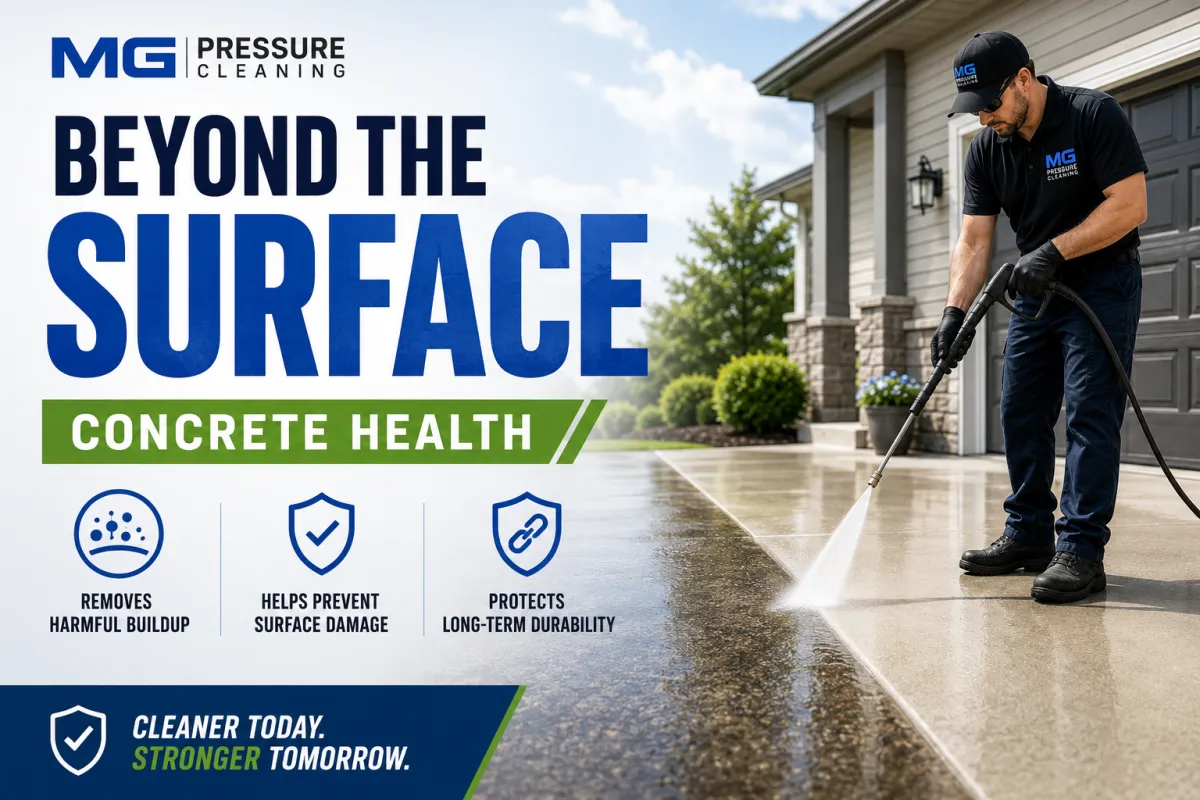
Beyond the Surface – Concrete Health
Introduction
Your driveway is more than just a parking space—it is one of the most visible and frequently used parts of your home. It is the first surface guests see when they arrive and the last they notice when they leave. In many ways, it quietly sets the tone for your entire property. A clean, well-maintained driveway gives an impression of care, order, and pride in your home. On the other hand, a stained, cracked, or neglected driveway can make even a beautiful house look worn down and poorly maintained.
But beyond appearance, your driveway serves a much more important role. It is a functional surface that endures constant stress every single day. Vehicles weighing thousands of kilograms repeatedly drive over it. Oil drips, fuel stains, and chemical leaks slowly seep into its surface. Weather conditions—intense sunlight, heavy rainfall, wind, and sometimes freezing temperatures—continually expand and contract the material. Over time, this constant exposure naturally breaks down even the strongest concrete surfaces.
What many homeowners do not realize is that concrete is not a solid, sealed material. It is actually porous, meaning it contains countless microscopic holes. These tiny openings allow water, dirt, oil, algae spores, and other contaminants to penetrate beneath the surface. At first, these may seem harmless. A small stain here, a dark patch there—but over time, they build up deep within the concrete structure. Once this happens, the damage is no longer just surface-level; it begins to affect the durability and lifespan of the driveway itself.
Without regular cleaning and maintenance, these contaminants continue to accumulate, gradually weakening the structure from within. What could have been a simple cleaning task eventually turns into permanent staining, surface erosion, or even costly repairs. This is why routine pressure washing is not just about aesthetics—it is a form of preventative maintenance that protects one of your home’s most important surfaces.
Understanding the Freeze–Thaw Cycle
One of the most damaging processes affecting concrete driveways is the freeze–thaw cycle. This occurs when water enters the pores and small cracks within the concrete, then freezes as temperatures drop. When water freezes, it expands. This expansion may seem small, but inside a confined space like concrete pores, it creates significant internal pressure.
Over time, this repeated expansion and contraction begins to break the concrete apart from the inside. What starts as hairline cracks gradually widens, allowing even more water to enter. Each cycle worsens the damage, creating a snowball effect that accelerates deterioration. Eventually, chunks of concrete may begin to loosen or break away entirely, leading to visible surface damage and structural weakening.
The presence of dirt, moss, algae, and debris makes this problem even worse. These materials act like sponges, trapping moisture and holding it against the surface for longer periods. Instead of drying naturally, the water remains inside the concrete longer, increasing the likelihood of freezing and expanding during colder conditions.
Regular pressure washing helps interrupt this cycle. By thoroughly cleaning the surface and clearing out clogged pores, it reduces the amount of water the concrete can absorb. This simple maintenance step plays a crucial role in preserving the strength and longevity of your driveway, especially in climates where temperature changes are frequent.
Stains Are More Than Just Cosmetic Damage
At first glance, oil stains, tire marks, and dark patches on a driveway might seem like minor cosmetic issues. However, these stains often signal deeper problems. Oil and chemicals do not just sit on the surface—they seep into the porous structure of concrete. Once absorbed, they begin to break down the internal bonding of the material, weakening it over time.
Tire marks are another common issue. They are caused by heat and friction transferring rubber compounds onto the surface. Over time, these marks build up in layers, creating stubborn discoloration that regular cleaning methods cannot easily remove. Algae and mildew growth, often seen in shaded or damp areas, also contribute to staining while adding an additional risk factor: slipperiness.
The longer these contaminants remain on the surface, the harder they are to remove. In many cases, what starts as a simple stain eventually becomes permanent discoloration. This is why early intervention through regular cleaning is essential. Professional pressure washing is designed not just to clean the visible surface but to extract embedded contaminants from deep within the concrete pores.
Safety First: Eliminating Slip Hazards
Beyond structural concerns, driveway maintenance is also a serious safety issue. One of the most overlooked dangers is the growth of algae, moss, and mildew. These organisms thrive in damp, shaded environments and can spread quickly across concrete surfaces, especially during rainy seasons.
When wet, these biological growths form a thin, almost invisible layer of slipperiness. This can turn a simple walkway or driveway into a hazard zone. Many slips and falls occur not because the surface is visibly dangerous, but because it appears normal when dry and becomes unexpectedly slick when wet.
This risk is particularly important for households with children, elderly individuals, or frequent visitors. A clean driveway significantly reduces the chances of accidents by restoring the natural texture and grip of the concrete surface. Professional pressure washing removes these biological layers completely, ensuring that the surface is not only visually clean but also physically safer to walk on.
The Long-Term Value of Regular Maintenance
Maintaining your driveway is not just about fixing problems—it is about preventing them. Regular cleaning extends the life of the concrete, preserves its appearance, and reduces the need for expensive repairs or resurfacing in the future.
When dirt and contaminants are removed consistently, the concrete remains stronger for longer. Water drainage improves, surface erosion slows down, and cracks are less likely to form. This proactive approach saves homeowners significant money over time, while also maintaining the curb appeal of the property.
In addition, a clean driveway enhances the overall aesthetic of your home. It creates a sense of order and cleanliness that extends beyond the driveway itself, positively impacting the entire exterior appearance of your property. Whether you are planning to stay in your home long-term or considering selling in the future, well-maintained outdoor surfaces can increase property value and buyer interest.
Protect Your Driveway Today
Your driveway works hard every day—protecting it ensures it continues to serve you well for years to come. Ignoring stains, cracks, and buildup only allows damage to progress silently beneath the surface. What starts as minor discoloration can eventually become structural deterioration requiring costly repairs or full replacement.
Regular pressure washing is one of the simplest and most effective ways to maintain your driveway. It restores the surface, removes harmful buildup, and prevents long-term damage caused by moisture, chemicals, and biological growth.
For professional driveway and walkway restoration, MG Pressure Cleaning is here to help. A clean driveway is more than just appearance—it is protection, safety, and long-term value for your home.
